Kayseri Province is the main gateway to Cappadocia, served by Kayseri Erkilet Airport (ASR) about 75 km east of Göreme. Most visitors continue straight through, but the province itself rewards a stop: Mount Erciyes (a 3,917 m volcano with a year-round ski resort), a walkable Seljuk old town built around a black-basalt castle, and Anatolia's most famous mantı (tiny meat dumplings). This guide covers what's genuinely worth your time and how to reach each place.
If you only have time between flights, you can still see the castle, the covered bazaar and a couple of Seljuk monuments in a half-day on foot in the city centre. With a full day, add Mount Erciyes or the Sultan Marshes.
Where Is Kayseri and Why Stop There?
Kayseri is a large, modern city of over a million people on the Central Anatolian plateau, sitting at the foot of Mount Erciyes. It was the ancient Caesarea (Mazaca), a Roman provincial capital, and later a major Seljuk centre, which is why so much 13th-century architecture survives in the core. For travellers it plays two roles: it is Cappadocia's busiest airport, and it is the one nearby city that feels like real working Turkey rather than a tourist village. The contrast with the fairy chimneys an hour west is exactly why a stop is interesting.
Top Things to See in Kayseri City
The historic core is compact and walkable, clustered around the castle and Cumhuriyet Square. These are the highlights, roughly in the order you would walk them:
- Kayseri Castle (Kayseri Kalesi): A striking fortress of black volcanic basalt in the dead centre of the city. Roman in origin, rebuilt by the Byzantines and heavily fortified by the Seljuks in the 13th century. The restored interior now holds shops and cafés.
- Hunat Hatun Complex: A 1238 Seljuk külliye (mosque, madrasa, tomb and Turkish bath) commissioned by the wife of Sultan Alaeddin Keykubad I — one of the best-preserved Seljuk complexes in Anatolia, with a free-to-enter courtyard.
- Döner Kümbet: An ornate cylindrical Seljuk mausoleum (c. 1276) covered in carved reliefs of lions, eagles and the tree of life. Small but one of the city's signature monuments.
- The Covered Bazaar (Kapalı Çarşı): A genuine working market, not a tourist arcade. Good for pastırma, dried fruit, copperware and textiles. Bargaining is normal in the carpet and souvenir stalls.
- Seljuk Civilisation Museum (Gevher Nesibe): Set in a 1206 hospital-and-medical-school complex, with displays on Seljuk medicine and architecture.
Mount Erciyes (Erciyes Dağı)
Mount Erciyes is a dormant volcano of 3,917 m that towers over the city and is visible from much of Cappadocia. Erciyes Ski Resort, about 25 km from the centre, runs gondolas and lifts and is one of Turkey's largest ski areas, typically operating from December into March or April. Outside the snow season the cable cars carry hikers and sightseers up for panoramic views over the plateau. It makes an easy half-day trip from the city by car.
What to Eat: Kayseri's Famous Food
Kayseri is a serious food city and several of its specialities are nationally famous:
- Mantı: Kayseri's signature dish — thumbnail-sized dumplings filled with spiced beef, served under garlicky yoghurt and melted butter with sumac and dried mint. Locals judge a cook by how many fit on a spoon.
- Pastırma: Air-dried beef cured with cumin and fenugreek. Kayseri is its spiritual home; you'll see whole sides hanging in bazaar shops.
- Sucuk: A firm, spiced beef sausage, often pan-fried with eggs for breakfast.
- Nevzine: A regional dessert of syrup-soaked pastry, a sweet finish to a heavy meal.
If your Kayseri visit is really just an airport connection and you'll be based in Cappadocia, you'll find excellent local kitchens in the villages too — places like Old Greek House in Mustafapaşa and Seten Restaurant in Göreme serve regional dishes (mains around ). A flat white with fairy-chimney views at King's Coffee in Göreme is a fair trade for skipping the city café scene.
Beyond the City: The Wider Province
- Sultan Marshes National Park (Sultansazlığı): A wetland roughly 60 km south, internationally important for birds. Flamingos, pelicans and herons pass through; spring and autumn are best for sightings.
- Külltepe (Kanesh): A Bronze Age site about 20 km northeast, where thousands of Assyrian cuneiform trade tablets were found — among the oldest written records from Anatolia.
- Talas: A historic hillside suburb with old Greek and Armenian stone houses, churches and cave dwellings, an easy detour from the centre.
Getting Around Kayseri and On to Cappadocia
Kayseri city has a modern tram and a dense bus network that covers the centre and reaches Erciyes-bound connections; within the old town you can walk between every major sight. The trickier leg is the airport-to-Cappadocia taxi ride, since public transport on that route is slow and infrequent, especially for early or late flights.
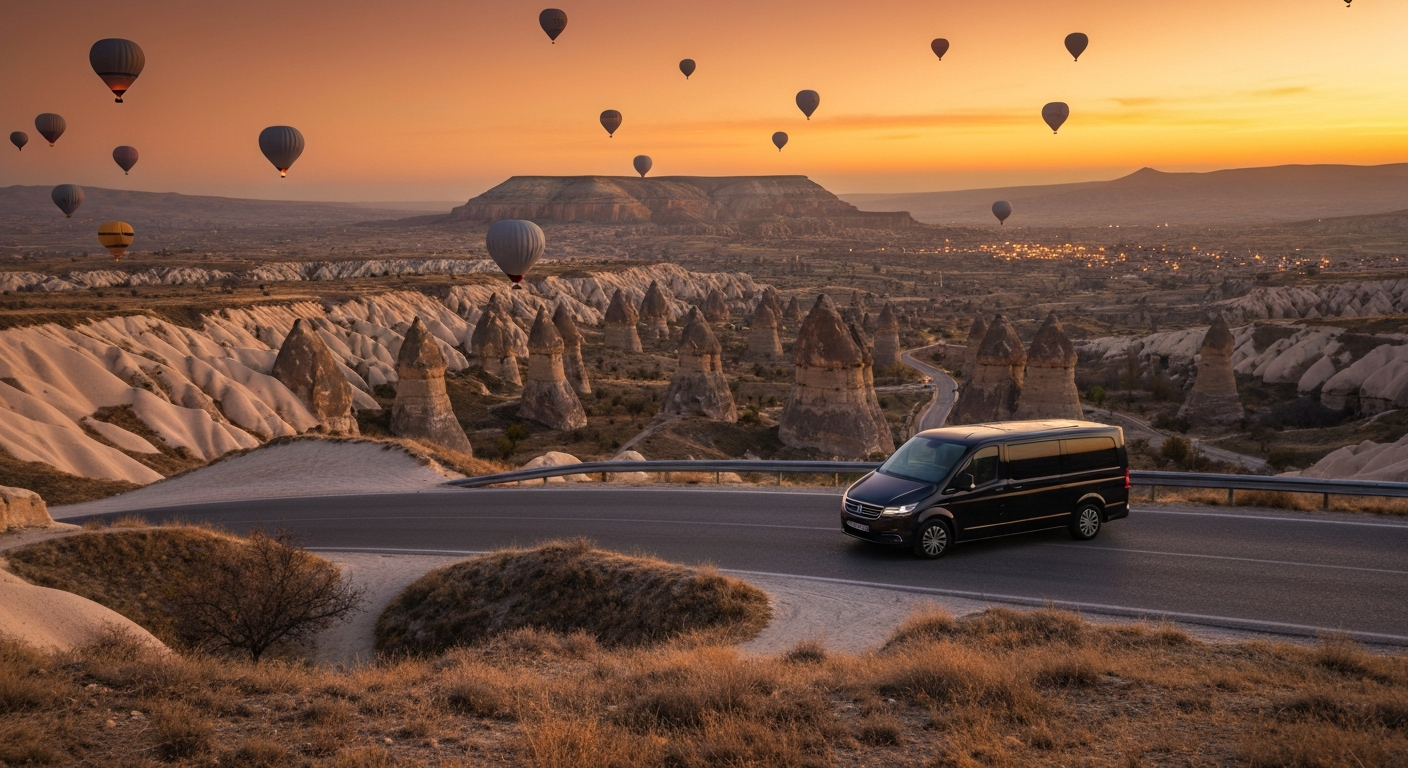
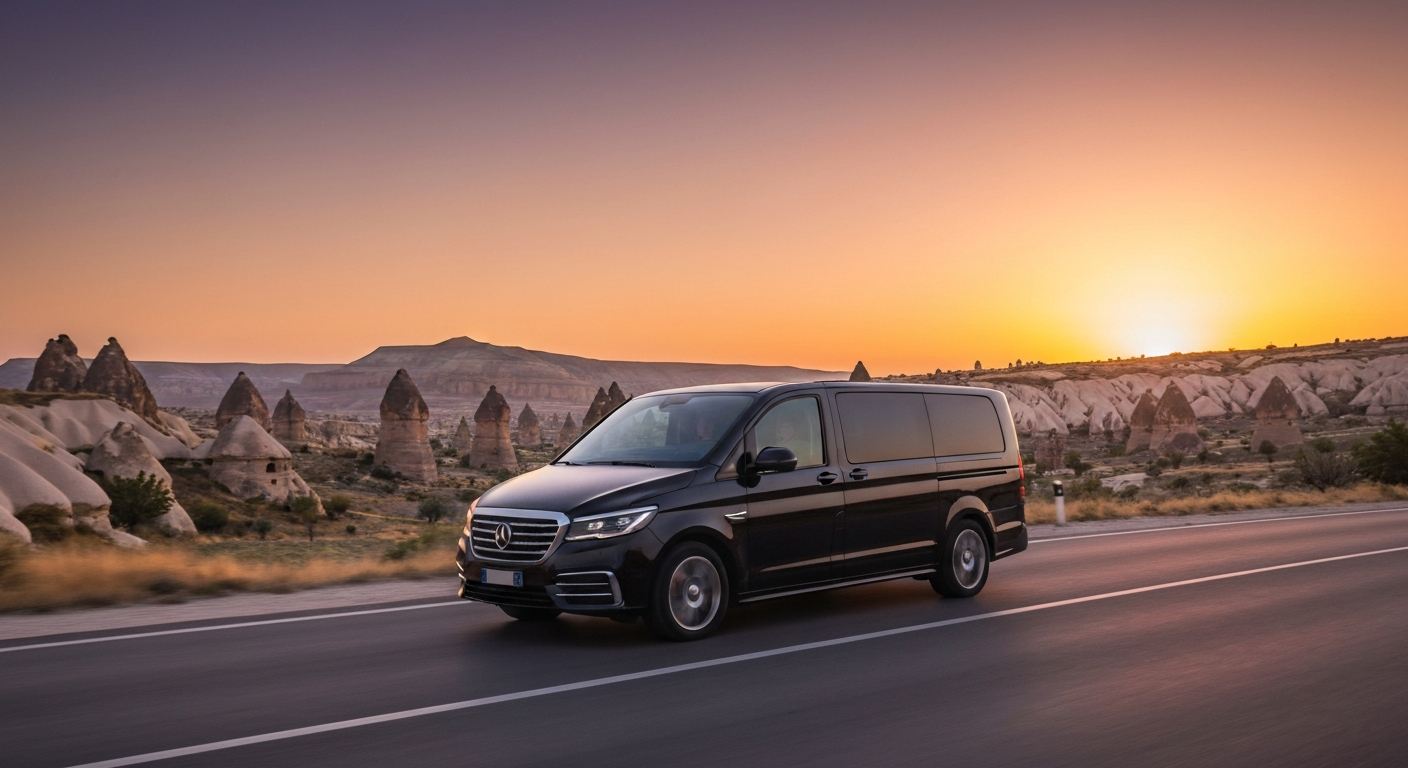
For the 75 km hop from Kayseri Airport to Göreme, Ürgüp or Uçhisar, a pre-booked private taxi is the simplest option: a fixed price, a driver waiting at arrivals and no negotiating at the kerb. For the current fare to your village, check the Cappadocia taxi price calculator. You can also read the full Kayseri to Cappadocia airport taxi guide, or the step-by-step Kayseri Airport to Göreme taxi guide for route details and timing.
Insider tip: if your flight lands after dark, pre-book. The airport taxi rank thins out fast on late arrivals, and the road to Göreme is unlit countryside — a confirmed driver waiting for you is worth far more than the small premium.
Frequently Asked Questions
How far is Kayseri Airport from Cappadocia (Göreme)?
Kayseri Erkilet Airport (ASR) is about 75 km from Göreme, the centre of Cappadocia, which is roughly a one-hour drive. Ürgüp and Uçhisar are a similar distance. Kayseri is the larger of Cappadocia's two airports; Nevşehir Kapadokya Airport (NAV) is closer at around 40 km but handles fewer flights.
Is it worth stopping in Kayseri city before Cappadocia?
Yes, if you have a spare half-day and enjoy history or food. Kayseri's basalt castle, the Hunat Hatun and Döner Kümbet Seljuk monuments, the working covered bazaar and its famous mantı make a worthwhile contrast to Cappadocia's villages. If your trip is short, it is perfectly fine to continue straight through and spend your time among the fairy chimneys.
Can you ski at Mount Erciyes near Kayseri?
Yes. Erciyes Ski Resort sits on the slopes of the 3,917 m volcano about 25 km from Kayseri and is one of Turkey's largest ski areas, with gondolas, multiple lifts and a season that typically runs from December into March or April. Outside winter the cable cars run for hikers and sightseers.
What food is Kayseri famous for?
Kayseri is best known for mantı (tiny beef dumplings under garlic yoghurt), pastırma (cumin-cured air-dried beef) and sucuk (spiced beef sausage). The city is considered the home of Turkish pastırma, and you'll find it hanging in shops throughout the covered bazaar.
How do I get from Kayseri Airport to my Cappadocia hotel?
The easiest way is a pre-booked private taxi that meets you at arrivals and drives the roughly one-hour route directly to your hotel in Göreme, Ürgüp, Uçhisar or another village, for a fixed price. Public buses are slower and poorly timed for early or late flights. Check the current fare to your village on the Cappadocia taxi price calculator.